How to Create a Fence Quote That Customers Approve
A fence quote does two jobs: it proves you understood the job, and it gives the customer a clean way to say yes. Quotes fail when they do the second job and skip the first — a lump-sum "100 ft wood fence: $6,200" reads like a guess, and guesses get compared on price alone.
The structure that closes
1. Customer + site block. Name, address, contact, and the date. Sounds obvious; it's the block that tells the customer this quote is theirs, not a form letter.
2. Scope summary. Two sentences describing what you're building: "Remove existing 90 ft chain link and install 100 ft of 6 ft cedar board-on-board with one 4 ft walk gate, posts set in concrete to frost depth." Specific scope is what protects both sides when expectations drift.
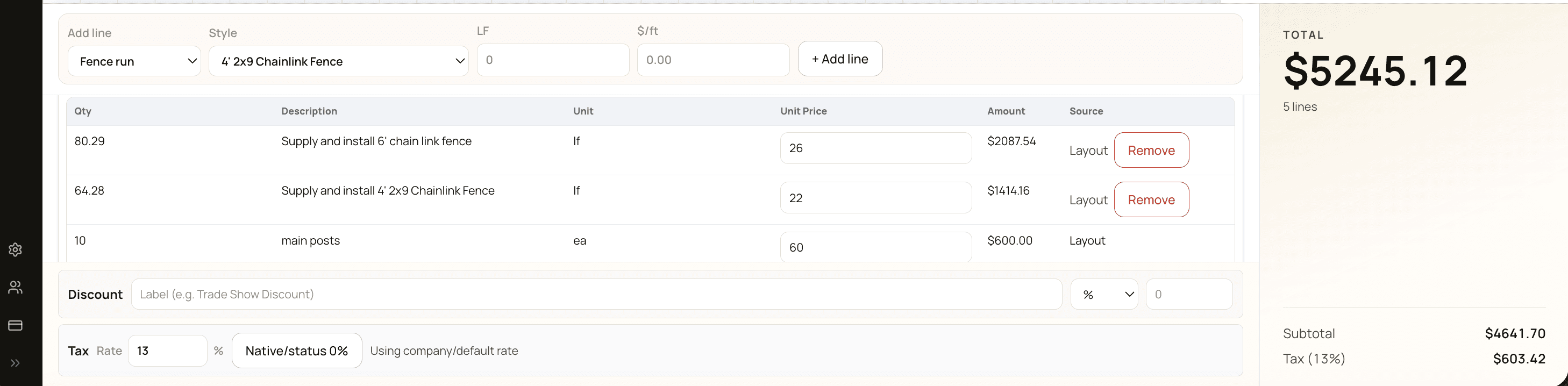
3. Line items with quantities. The fence section is the credibility engine:
| Line | Qty | Unit | Unit price | Total |
|---|---|---|---|---|
| Remove existing fence + haul | 90 | ft | $5.00 | $450.00 |
| 4×4 posts set in concrete (8 ft) | 14 | each | $95.00 | $1,330.00 |
| 6×6 gate posts (9 ft) | 2 | each | $145.00 | $290.00 |
| 2×4 rails (3 per bay) | 39 | each | $18.00 | $702.00 |
| 1×6 cedar pickets, board-on-board | 268 | each | $6.50 | $1,742.00 |
| 4 ft walk gate with hardware | 1 | each | $680.00 | $680.00 |
| Subtotal | $5,194.00 |
4. Tax. One visible tax line, province or state correct — HST, GST + QST, GST + PST, or local sales tax. Tax buried inside line items reads as sloppiness; a clean tax line reads as a real business.
5. Deposit and payment terms. Standard: 30–50% deposit on acceptance (usually materials), balance on completion. Written terms stop the end-of-job negotiation before it starts.
6. Acceptance. A signature block and a validity window (quotes expire in 30 days; material prices move). The quote is a contract-in-waiting — make it behave like one.
What moves a fence quote from sent to signed
- Quantities on the quote. The line-item table above is the single strongest close: it shows the customer exactly what their money buys, and it's why lump-sum quotes lose to detailed ones at equal price.
- One revision, priced. When the customer wants a change, update the quote and resend. Unpriced "we'll figure it out later" is how scope creeps into the install.
- Speed. A quote sent the same day as the site visit closes dramatically better than one sent next week. The customer is emotionally sold at the moment of measuring — the quote is the yes-button.
Building the quote from the estimate
The quote should be the estimate wearing a suit — same quantities, same prices, plus tax and terms. When the quote is a separate document typed from a spreadsheet, drift enters: the estimator's counts, the office's numbers, and the PDF never quite agree. Fence quote software exists to kill that drift: the takeoff, prices, tax, and the branded PDF all live on one job record.
Start from the free fence estimate template — the same line structure, ready to fill — then run the quantities through the fence calculator so the numbers on the quote match the numbers in the truck.
FenceTracer
Send a quote the same day you measure
FenceTracer builds the line-item quote from the drawn takeoff with your prices and tax defaults — customer-ready PDF in under a minute. Free for 30 days.Frequently asked questions
What should a fence quote include?
Customer and site details, a scope summary, line items with quantities and prices, a tax line, deposit and payment terms, and an acceptance block with a validity window.
Should fence quotes show quantities or just a total?
Show quantities. Detailed line items prove the price is the job, not a guess — and they protect you when the customer later asks why a revision costs what it costs.
What deposit should I take on a fence job?
30–50% on acceptance is standard, sized to cover the materials you'll order. Balance on completion, with written terms for both — in writing is the part that actually matters.