How to Estimate a Fence
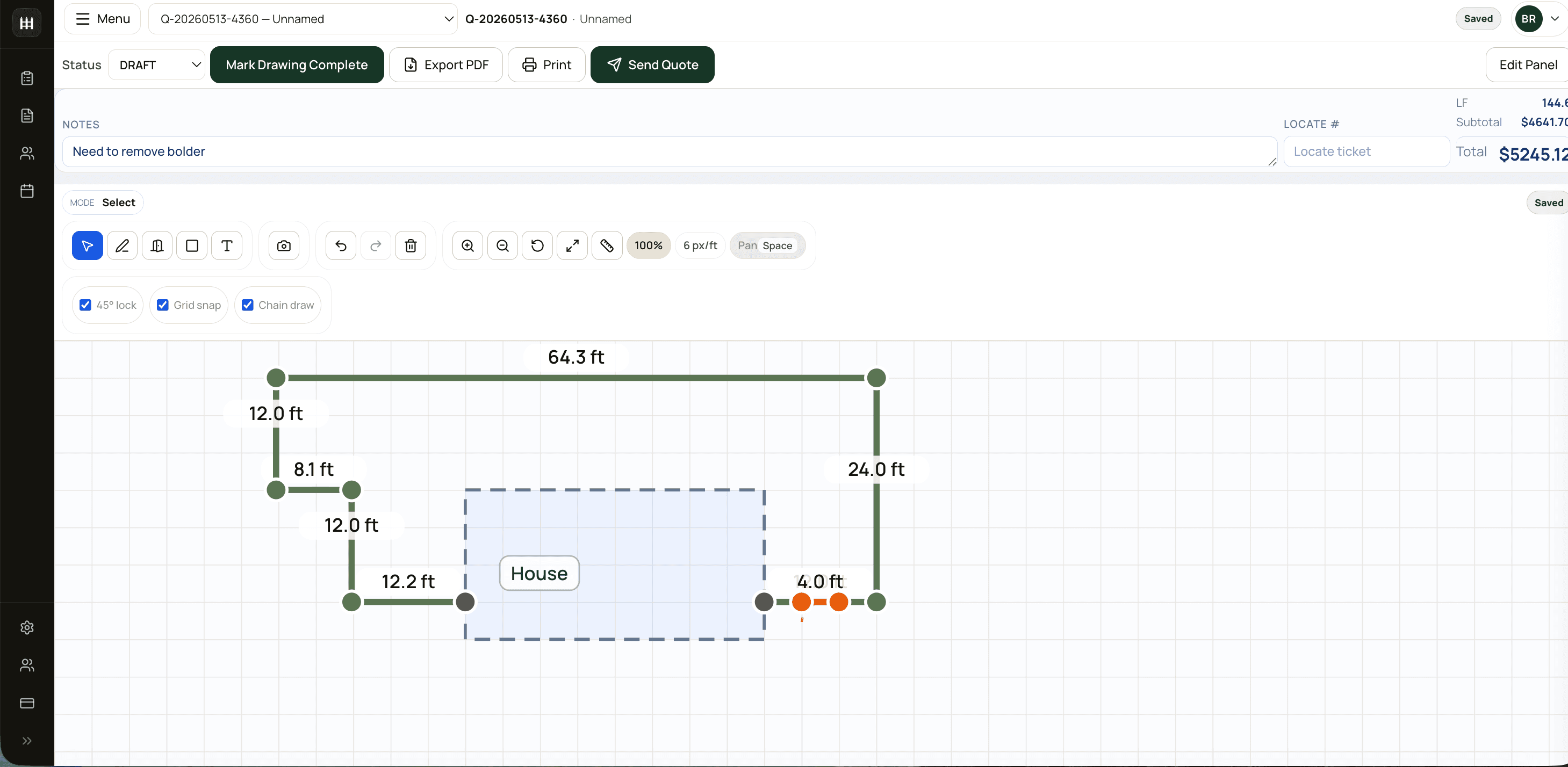
Estimating a fence is five decisions in a specific order: where it goes, what it's made of, how many parts that takes, what those parts cost, and what the job must sell for to be worth doing. Every fence estimate goes wrong in one of those five places — usually the third, because that's where the counting happens by hand.
This guide walks the full workflow the way a working estimator does it, with the formulas at each step and links to the free calculators that run them.
Step 1: Measure the actual run
Walk the line and measure in feet. Record, in order:
- Total length of each straight run
- Corners (count them — they change posts)
- Gates: count, width, and swing direction
- Height changes or steps
- Existing fence or obstacles on the line (removal is a line item)
- Access: can equipment reach the line, or does it all go by wheelbarrow?
Measure in feet and tenths, not inches. Write it down in the order you walked it — that order becomes your material list's structure later.
Step 2: Choose the fence type and style
The fence type decides everything downstream:
| Type | Typical height | Material cost/ft (CAD, starter pricebook) | What changes the count |
|---|---|---|---|
| Wood board | 4–6 ft | $16–$20 | Picket gap, rails (2 vs 3) |
| Wood privacy | 6–8 ft | $19–$26 | Overlap style, post spacing for wind |
| Vinyl | 4–8 ft | $30–$45 | Pre-built panels, post types |
| Chain link | 4–6 ft | $10–$16 | Assembly grade, terminal hardware |
Ask the customer two questions before quoting: what height, and what's the neighbour's fence situation (shared line, permits, property line). Those two answers move material more than anything else.
Step 3: Calculate materials
Run each of these formulas per straight run:
- Posts =
ceil(run ÷ spacing) + 1— includes both ends. Add 2 gate posts per gate. - Bays (sections) =
ceil(run ÷ spacing) - Rails = bays × 2 (under 6 ft) or × 3 (6 ft+)
- Pickets =
ceil(run inches ÷ (board width + gap)) + 1 - Concrete = 2 bags × line/end posts + 3 bags × gate posts
- Chain link fabric = (run − gate widths) × 1.05, in 50 ft rolls
- Tension bars = 2 per terminal post + 1 per gate post; bands = bars × (height + 1)
Don't do this arithmetic on the job site. Use the free tools:
- Fence calculator — all types, one form
- Fence material calculator — full itemized list
- Wood fence calculator · Privacy fence calculator · Vinyl fence calculator · Chain link fence calculator
Step 4: Price materials
Ballpark prices are fine for a sanity check, never for a quote. The estimate must price against your supplier's actual numbers — including delivery, tax, and the waste factor your crews actually run. In FenceTracer, the pricebook is mapped once per company and every estimate uses it automatically, so two estimators can't quote the same fence $800 apart.
Step 5: Add labour, overhead, and margin
Materials are the easy half. The estimate also carries:
- Labour: crew rate per hour × realistic hours (digging, setting, framing, pickets, gates, cleanup)
- Equipment: auger, dump trailer, skid steer if the site needs it
- Removal/disposal of the old fence if present
- Overhead: insurance, vehicle, admin — usually 15–25% of labour
- Margin: 20–40% depending on market — decide it before the customer does
Read how to price a fence job for the full pricing math.
Step 6: Turn it into a quote
The quote is the estimate with a customer on it: scope line items, quantities, price each, tax, deposit terms, and acceptance. See how to create a fence quote and the free fence estimate template.
FenceTracer
Run this whole workflow on one screen
FenceTracer turns the drawn layout into materials, pricing, tax, and a branded quote PDF — the same five steps, without the re-keying. Free for 30 days, no credit card.Frequently asked questions
How long does it take to estimate a fence?
By hand, a 100 ft fence with a gate takes 30–60 minutes end to end: measure, count, price, write the quote. With a drawing-driven takeoff and a mapped pricebook, the same job lands in about 10 minutes including the PDF.
What is the most common fence estimating mistake?
Counting posts by dividing length by spacing and stopping there — which drops the end posts. The correct formula is ceil(length ÷ spacing) + 1, plus two gate posts per gate. The second most common: quoting material prices from memory instead of the supplier's current list.
Should the estimate include tax?
Yes — the customer should see a tax-inclusive total. In Canada, HST, GST + QST, or GST + PST by province; in the US, state and local sales tax. FenceTracer keeps province and state defaults in the quote workflow.